
Choose a transparent stain if you want to showcase your wood’s natural grain and don’t mind refinishing every year or two. Choose a semi-transparent stain for a balance of color and visible wood texture with moderate upkeep. Choose a solid stain if you want maximum color coverage and the longest-lasting protection, even if it hides the grain. Benjamin Moore’s Woodluxe line offers all three options, and the team at Dragon Scale Paint can help you match the right one to your deck, fence, or furniture.
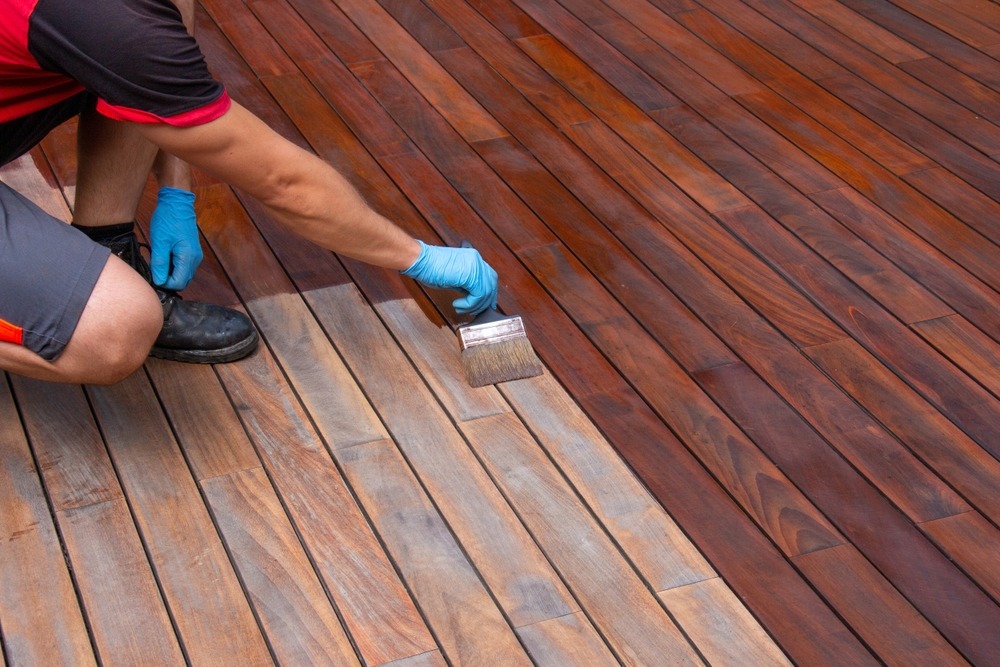
If you’ve ever stood in front of a wall of wood stain cans wondering what the difference actually is between “transparent,” “semi-transparent,” and “solid,” you’re not alone. It’s one of the most common questions we hear from homeowners, contractors, and DIYers who walk through our doors at Dragon Scale Paint in Laurel, MD. The answer depends less on personal preference and more on what your wood needs, how much maintenance you’re willing to do, and the look you’re after.
As a veteran-owned Benjamin Moore paint store serving Laurel, Columbia, Clarksville, Bowie, and the surrounding communities, we’ve spent years helping neighbors pick the right finish for decks, fences, cabinets, and outdoor furniture. This guide breaks down the differences between transparent, semi-transparent, and solid deck stains so you can make a confident decision before your next project.
What does “transparent” mean on a can of deck stain?
Transparent deck stain contains little to no pigment, so it allows the wood’s natural grain, knots, and texture to show through almost completely. Transparent stains are formulated primarily to enhance the wood’s appearance while providing light protection against moisture and UV exposure.
Transparent stains work best on newer wood that already has an attractive grain pattern worth highlighting. If your deck is made from cedar, redwood, or another naturally beautiful species, a transparent finish lets that character take center stage.
The tradeoff is durability. Because transparent stains offer the least UV protection of the three options, they tend to fade faster and typically need reapplication every one to two years, especially on surfaces that see direct sun exposure, like south-facing decks common throughout the Laurel and Columbia area.
Who should choose a transparent stain?
Choose a transparent stain if your wood is new or in excellent condition and showing off the natural grain matters more to you than stretching out the time between maintenance coats. It’s a strong fit for homeowners who enjoy the upkeep rhythm of yearly deck care and want their wood to look as close to its natural state as possible.
How is semi-transparent stain different from transparent stain?
Semi-transparent stain contains more pigment than transparent stain, which means it adds a visible tint of color while still allowing the wood grain to show through, just less distinctly. Semi-transparent stains strike a middle ground: enough pigment to provide added UV resistance and masking of minor imperfections, but not so much that the wood’s natural texture disappears.
This category tends to be the most popular choice among the homeowners and contractors we work with, because it offers a noticeable boost in durability over transparent stains without fully concealing the wood underneath. Semi-transparent stains generally last longer between recoats than transparent options and handle weathered or slightly imperfect wood more gracefully, since the added pigment helps camouflage small blemishes, water stains, or uneven coloring that may have developed over a few seasons.
Who should choose a semi-transparent stain?
Semi-transparent stain is a smart choice if your deck or fence has a few years of wear on it, or if you want a defined color while still seeing the grain. It’s also a practical option for anyone who wants to space out their maintenance schedule a bit more than a transparent finish would allow, without committing to a fully opaque look.
When does solid stain make more sense than transparent or semi-transparent?
Solid stain, sometimes called opaque stain, contains the highest level of pigment and functions much like a thin coat of paint. It fully covers the wood grain, providing a uniform, consistent color across the entire surface. Because of this heavier pigment load, solid stains generally offer the strongest UV and moisture protection of the three categories, which translates to the longest intervals between recoats.
Solid stain is particularly well-suited for older wood with visible wear, color inconsistencies, or repairs, since the opaque coverage hides imperfections that transparent and semi-transparent stains would leave exposed. It’s also a popular choice for fences, railings, and other structures where a clean, uniform color matters more than showcasing the wood grain.
Keep in mind that once you commit to a solid stain, going back to a transparent or semi-transparent finish later usually means stripping the wood down to bare material, since the opaque pigment is difficult to reverse. It’s worth weighing that long-term commitment before you decide.
Who should choose a solid stain?
Solid stain makes the most sense for weathered decks, fences, or furniture where the wood’s natural appearance has faded or become inconsistent, and for anyone prioritizing color consistency and extended durability over visible wood grain.
A closer look at the Benjamin Moore Woodluxe line
At Dragon Scale Paint, we carry the Benjamon Moore Woodluxe line, which spans transparent, semi-transparent, and solid formulations designed for decks, fences, siding, and outdoor furniture. Woodluxe products are built to handle the humid Mid-Atlantic summers and freeze-thaw winters that Laurel-area homeowners deal with every year, so whichever finish category you land on, you’re working with a product engineered for our climate.
Factors that affect which stain is right for your project
A few practical questions can help narrow down the decision before you even step into our store:
- What’s the current condition of the wood? Newer, well-preserved wood supports transparent or semi-transparent finishes. Older or weathered wood often does better with semi-transparent or solid coverage.
- How much maintenance are you willing to do? Transparent stains require the most frequent attention, semi-transparent falls in the middle, and solid stains generally stretch the longest between recoats.
- What look are you going for? If showcasing the grain is a priority, stay in the transparent-to-semi-transparent range. If a clean, consistent color matters more, solid stain is likely your answer.
- What’s the wood used for? Decks that see heavy foot traffic and direct sun often benefit from the added protection of semi-transparent or solid stains, while furniture or accent pieces might be better suited to a transparent finish that highlights craftsmanship.
Get expert advice before you buy
Picking between transparent, semi-transparent, and solid stain isn’t just about color; it’s about matching the right product to your wood’s condition, your climate, and how much upkeep you’re ready to take on. That’s exactly the kind of guidance we built Dragon Scale Paint to provide. As a veteran-owned, Benjamin Moore store rooted in Laurel, we treat every customer like a neighbor, not a transaction, and we’d rather spend ten extra minutes helping you choose the right stain than sell you the wrong one.
Visit us at 14207 Baltimore Ave in Laurel, MD, browse our full selection on the Wood Stains & Finishes page, or reach out to our team directly for personalized advice on your next deck, fence, or furniture project. We’re here to help you get it right the first time.