
Fresh cabinets can change an entire kitchen. However, the paint you choose decides whether that change lasts for years or starts to chip by spring. Many homeowners grab leftover wall paint for the job. It looks fine at first. Within weeks, though, doors stick to frames, edges peel near handles, and grease stains refuse to wipe clean.
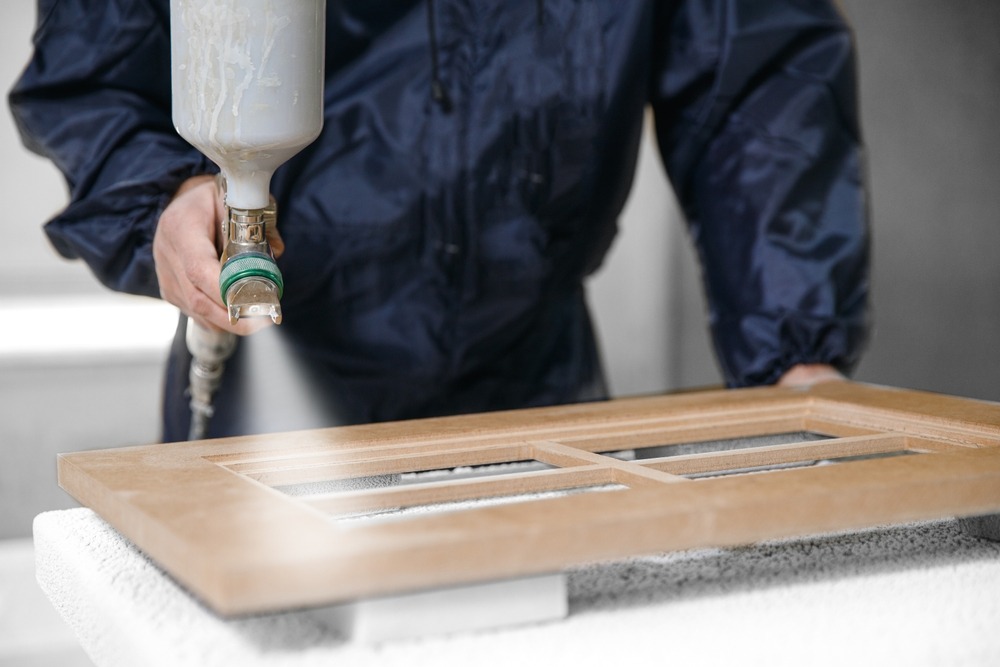
The cause is rarely poor technique. It is usually the wrong product. Cabinets handle more daily wear than almost any other painted surface in your home, and they need a coating built for that work.
At Dragon Scale Paint, our Benjamin Moore store in Laurel, MD, we help homeowners and contractors choose cabinet finishes every week. This guide explains what paint is best for kitchen cabinets, why wall paint is the wrong fit, and how to prepare for a finish that holds up.
Why Standard Wall Paint Fails on Cabinets
Wall paint is an excellent product for walls. It is designed to cover large vertical surfaces, hide minor flaws, and flex slightly as a home settles. Walls are rarely touched, bumped, or scrubbed. Cabinets are another matter, and three problems tend to appear when wall paint is used on them.
Poor Adhesion
Many cabinets have factory finishes, older oil-based paint, or clear coats that are smooth and slick. Wall paint is not made to grip these surfaces. Without strong adhesion, the paint film can scratch off with a fingernail or peel in sheets around high-contact areas like door edges and drawer pulls.
Soft, Less Durable Film
Most wall paints dry to a softer film than cabinet finishes do. That softness works well on drywall but not on doors that are opened dozens of times a day. Kitchen cabinets also deal with steam, cooking oils, and frequent cleaning. A softer coating shows scuffs, absorbs stains, and wears through faster.
Blocking and an Uneven Finish
“Blocking” is the term for painted surfaces sticking together when pressed against each other. With wall paint, cabinet doors can cling to their frames and tear the finish when opened. Wall paint also tends to show brush strokes and roller texture. On a cabinet door, those marks are easy to see.
What Makes Cabinet Paint Different
Paint designed for cabinets and trim addresses each of these issues. When comparing cabinet paint vs. wall paint, focus on three performance qualities.
- Hardness. Cabinet paints cure to a hard, durable film that resists chips, scuffs, and fingerprints. This toughness matters most around handles, lower cabinets, and the sink base.
- Block resistance. A well-formulated cabinet enamel resists sticking once it has dried properly, so doors and drawers close cleanly without pulling at the finish.
- Leveling. Quality cabinet paints flow out as they dry. Brush marks and roller texture smooth over, leaving a finish that looks close to factory-applied.
Together, these qualities create a surface that looks refined and stays easy to clean.
Benjamin Moore Paints for Kitchen Cabinets
Benjamin Moore offers products made for this kind of work. At our Laurel store, two options come up most often in cabinet conversations.
Benjamin Moore ADVANCE
ADVANCE is a waterborne alkyd interior paint. It is valued for its smooth, furniture-like finish and strong leveling. It brushes on much like a traditional oil-based enamel but cleans up with soap and water. ADVANCE dries to a hard, durable film suited to cabinets, doors, and trim.
ADVANCE needs patience. It has a longer recoat time than typical latex wall paint, and it continues to harden for weeks after application. Handle doors gently during that period for the best long-term results.
INSL-X Cabinet Coat
Cabinet Coat, from Benjamin Moore’s INSL-X line, is a urethane acrylic enamel made specifically for cabinets and furniture. It is designed for a smooth, durable finish and good resistance to everyday wear. Many homeowners appreciate its straightforward application and quicker drying characteristics.
Both products perform well. The better choice depends on your cabinets’ current surface, your timeline, and the look you want. You can explore our full selection on our paints page, and our team can help you compare options in person.
Satin vs. Semi-Gloss: Choosing the Right Sheen
Sheen affects both appearance and performance. For kitchen cabinets, most homeowners choose between satin and semi-gloss.
Satin offers a soft, low-luster glow. It looks elegant and modern, and it hides minor surface flaws better than higher sheens. Satin is a strong choice for shaker-style doors and contemporary kitchens.
Semi-gloss has a brighter, more reflective finish. It is easier to wipe clean and handles grease and fingerprints well, which makes it popular for busy family kitchens. The tradeoff is visibility. Semi-gloss highlights dents, grain, and any prep shortcuts.
As a general rule, choose satin if you want a refined look that forgives small imperfections. Choose semi-gloss if easy cleaning comes first and your cabinet surfaces are in good condition.
Prep and Priming: Where Lasting Results Begin
Even the best cabinet paint depends on the surface beneath it. Professional painters often say that preparation determines most of the outcome. These steps give your finish the best chance to last.
- Remove doors, drawers, and hardware. Label each piece so it returns to the right spot. Painting flat surfaces also produces a smoother finish.
- Degrease thoroughly. Kitchen cabinets collect cooking oils that prevent adhesion. Clean every surface with a degreasing cleaner, then rinse and let it dry.
- Scuff sand. Lightly sand the existing finish with fine-grit sandpaper to dull the gloss and give the primer something to grip. You are not trying to strip the cabinet, only to roughen it.
- Remove all dust. Vacuum, then wipe with a tack cloth or slightly damp cloth.
- Prime with the right product. The right primer depends on your surface. Slick or glossy finishes often call for a bonding primer such as INSL-X STIX. Stained or bare wood may need a stain-blocking primer to stop tannins from bleeding through light colors. Benjamin Moore’s Fresh Start primers cover many common situations.
- Apply thin, even coats. Two thin coats look better and cure harder than one heavy coat. Lightly sand between coats for an even smoother result.
- Allow time to cure. Reinstall hardware carefully and treat surfaces gently for the first few weeks.
Laminate and thermofoil cabinets need extra care, and some may not be good candidates for paint. Talk with a specialist before starting. Browse our primers and sealers to see the products that create a strong foundation for cabinet projects.
When to Visit an Expert for Color Matching
Choosing a cabinet color can be harder than choosing a wall color. Cabinets cover a large share of your kitchen, sit beside countertops and backsplash tile, and change appearance under different lighting. A shade that looks warm on a small chip can read very differently across a full wall of cabinets.
A visit to the store helps in several situations:
- Matching an existing color. Bring a door, drawer front, or sample piece for in-person color matching.
- Coordinating with finishes. Bring a countertop sample, tile, or hardware so you can compare colors side by side.
- Unfamiliar surfaces. If you are unsure whether your cabinets are wood, laminate, or previously painted with oil, our team can recommend the right primer and paint pairing.
- Planning for contractors. Contractors and property managers can count on reliable supply and product guidance for larger projects.
Expert guidance at the start can save hours of rework and the cost of a second set of materials.
Get Your Cabinet Project Started With Dragon Scale Paint
Painted cabinets can deliver a stunning kitchen update, provided the paint matches the job. Wall paint simply is not designed for the adhesion, hardness, and block resistance cabinets demand. Choose a cabinet-grade product such as Benjamin Moore ADVANCE or INSL-X Cabinet Coat, select a sheen that fits your kitchen, and invest in careful preparation. The result will hold up for years.
Dragon Scale Paint is a Service-Disabled Veteran-Owned Small Business built on integrity, craftsmanship, and service. We stock the full Benjamin Moore line and take the time to help each customer choose with confidence. We also offer free local delivery in Laurel, Columbia, Clarksville, Bowie, and surrounding communities.
Visit us at 14207 Baltimore Ave in Laurel, call (301) 776-5127, or contact our team for expert advice on your cabinet project. Bring a door or sample, and we will help you find the right paint, primer, and color.